
Insights
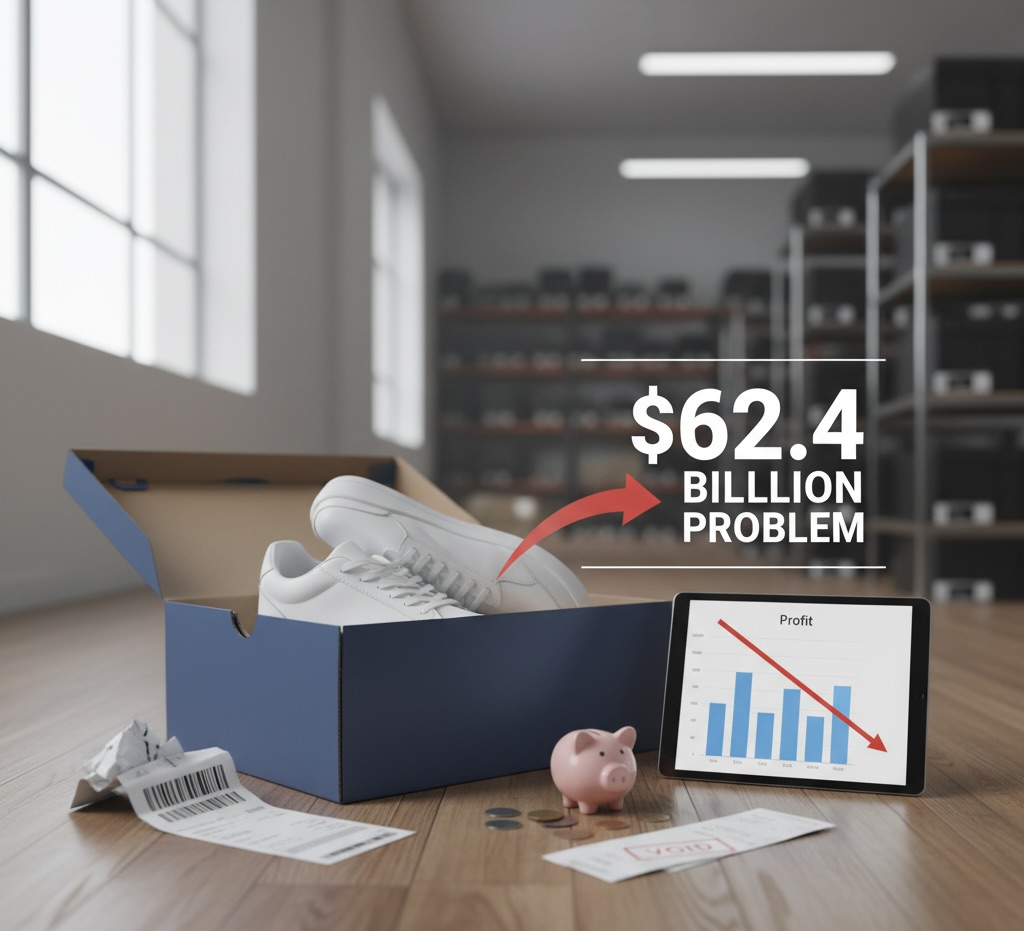
The $62.4 Billion Problem: Why Poor Fit is the Silent Killer of Shoe Retail Profit
In the booming world of e-commerce, few sectors face a challenge as persistent and costly as online shoe retail. While the convenience of digital storefronts has revolutionized shopping, it has also unearthed a gaping flaw in the customer journey: the uncertainty of fit. This single issue isn’t just a minor inconvenience; it’s a multi billion dollar drain on your bottom line.
Consider this: industry averages for footwear and apparel returns often hover around 30–40% for e-commerce sales. This is not just lost revenue from the initial sale; it ia a compounding problem. Every return triggers a cascade of hidden costs:
- Double Shipping: the original outbound shipping cost, plus the inbound return shipping cost.
- Restocking Labor: processing the return, inspecting the item, and re-entering it into inventory.
- Payment Processing Fees: many platforms do not fully refund transaction fees on returns.
- Lost Sales Opportunity: the returned item was unavailable for another paying customer.
- Environmental Impact: increased logistics and waste.
- Eroded Customer LTV: a customer who receives a poor fit is less likely to trust your brand again.
The Root Cause: The E-commerce Gap
The culprit is simple: the disconnect between a digital image and the physical reality of a shoe on a foot. Customers are forced to guess, interpret size charts that vary wildly between brands, and often resort to “buying-to-try”, purchasing multiple sizes or styles with the full intention of returning most. This is not fraud, it is a rational workaround in an environment optimized for convenience, not precision.
Brick and mortar stores offered tactile certainty. E-commerce stripped that away, leaving a void that size charts and vague descriptions simply cannot fill.
The Solution: Confidence, Not Guesswork
The key to unlocking profitability is not getting better at processing returns, it is preventing them. That requires shifting from post-purchase damage control to pre-purchase fit certainty.
Imagine if shoppers could know before clicking “Add to Cart”, how a specific model will fit their unique foot. Predictive fit systems bridge customer foot data (e.g., length, width, arch, instep) with the internal dimensions and fit characteristics of each shoe. The output is not a vague size suggestion, but a personalized fit prediction per model.
What Good Looks Like
- Frictionless data capture (guided photos + minimal inputs, no app required).
- Model-by-model fit (not generic size charts).
- Transparent rationale (why a size is recommended, reducing doubt).
- Real-time results on PDP, boosting conversion and cutting returns.
Actionable Takeaway: Track the “Why” and Embrace the “How”
Start by tagging and analyzing return reasons with discipline. If “Wrong Size/Fit” leads the list, you are dealing with a systemic gap that technology can close. The era of guessing games in online shoe retail is ending. Predictive fit is not a luxury, it is a strategic imperative to reclaim margin, protect sustainability goals, and build durable customer loyalty.
Do not optimize the returns process, minimize the need for it. Fit certainty is the new profit center.